



Head of International Affairs in Research and Technology at the Ministry of Health: Internationalizing Research Is Not a Decorative Endeavor It Is an Imperative
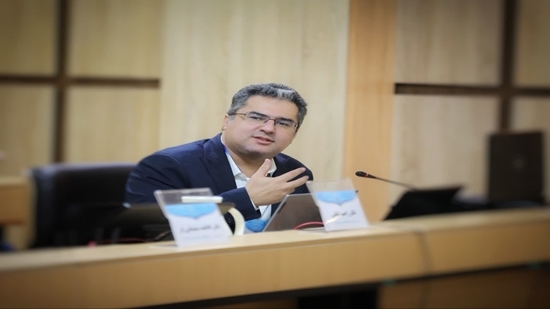
Emphasizing the necessity of shifting the ministry headquarters’ approach from “purely policymaking and governance” to “operational facilitation,” Dr. Arman Zargaran, Head of International Affairs in Research and Technology at the Ministry of Health and Medical Education, underscored the vital need for internationalizing research during a capacity-building workshop for the international sector of research and technology in Macro-Region 6, hosted by Zanjan University of Medical Sciences.
According to WebDA-Zanjan, speaking at this gathering and pointing to prevailing national challenges such as budgetary constraints and sanctions, Dr. Zargaran stated: “Today, international development in research is no longer a ceremonial or decorative matter; it is an undeniable imperative to prevent any decline in the quality of the country’s research and technology under these difficult circumstances.”Referring to the legal mandates assigned under the country’s 7th National Progress Development Plan, he emphasized the necessity of elevating Iran’s scientific standing in knowledge production, invention, and innovation indices, adding: “Achieving these objectives requires maximizing the utilization of international capacities and the active participation of universities in alignment with their indigenous potentials.”
Citing one of the serious vulnerabilities in universities’ international relations as the signing of memoranda of understanding (MOUs) without designated stewards, the Ministry of Health official asserted: “Signing an MOU solely by the presidents of two universities without an operational executive leads nowhere. International agreements must be individual-driven, designating a specific responsible person for each agreement to ensure accountability for its implementation.”Continuing his remarks, he pointed to the ministry’s supportive measures aimed at empowering human capital, stating: “Regarding sabbatical leaves and the dispatch of faculty members, the headquarters’ approach focuses on facilitating affairs, striving to minimize administrative barriers despite budget limitations. Furthermore, establishing appropriate platforms for transferring foreign currency proceeds derived from joint projects—such as collaborations with the World Health Organization (WHO)—stands among other achievements that have paved smoother pathways for financial interactions.”
Announcing the revival of the Secretariat of WHO Collaborating Centres within the Ministry of Health, Dr. Zargaran highlighted efforts to expand these centres beyond the monopoly of the capital, adding: “Currently, 18 collaborating centres are active across the country, and the Ministry of Health is fully prepared to support universities possessing the requisite potential to play regional and international roles.”He introduced the recruitment of international students within the framework of “research-based” programs as an opportune platform for faculty and university branding, foreign currency revenue generation, and the establishment of sustainable scientific networks, noting that the national bylaws regarding this initiative have been officially communicated to universities.
In conclusion, Dr. Zargaran noted that establishing and strengthening “Scientific Communication Offices” within the research and technology deputy offices of universities represents a key step toward empowering faculty members for personal branding and effectively showcasing technological achievements on the international stage, affirming that the Ministry of Health will serve as a supportive and facilitating partner along this path.

Leave a comment