



ZUMS Vice-Chancellor for Health: Health Secretariats Serve as Facilitators, Not Executive Bodies / Remarkable Surge in Disease Detection Indices in Qeydar via Family Medicine Program Implementation
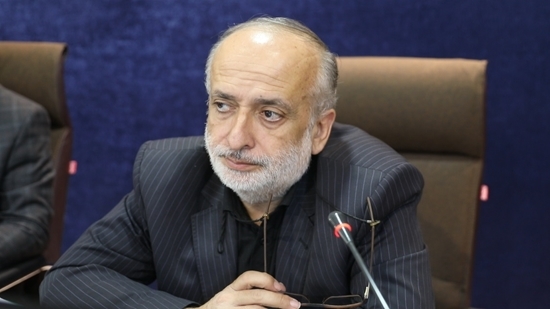
Emphasizing that health and food security secretariats act as intersectoral facilitators and coordinators rather than executive or policymaking entities, Dr. Mohammadreza Saeini, Vice-Chancellor for Health at Zanjan University of Medical Sciences (ZUMS), reported a significant growth in care and disease-detection indices in Qeydar following the implementation of the new version of the Family Medicine and Referral System Program.
According to WebDA-Zanjan, speaking at the second one-day symposium of presidents and experts from the Secretariats of Health and Food Security of medical universities and faculties across Macro-Region 6, hosted by ZUMS, Dr. Saeini elucidated the structural standing of the secretariats. He stated: “Colleagues within the health secretariats must bear in mind that the primary mission of this domain is facilitation and assistance in advancing objectives. The secretariat is not intended to replace executive departments such as health or medical care, nor to assume a macro-policymaking role. Instead, the secretariat must maintain a coordinating function, ensuring that responsible organizations and sectors actively pursue and advance approved programs with a strong sense of accountability.”Referring to the background of implementing the family medicine program nationwide and the experiences gained from its pilot implementation in past years, he noted: “The fundamental philosophy of family medicine is to establish proper management and guidance at level one, preventing unnecessary referrals to secondary specialty care. This optimizes resource allocation, fosters an efficient referral system, and replaces passive patient visits with active care.”Elaborating on the implementation process of the urban version of the program in Zanjan Province, Dr. Saeini stated: “In Khodabandeh County, the program continues for the rural population and cities with populations under 20,000 according to standard procedures, while for the urban population above 20,000 in Qeydar (approximately 42,000 residents), it has been operationalized through the establishment of 14 family medicine bases.”
Providing a comparative statistical analysis of health indices in Qeydar over a four-month period since the inception of the program, Dr. Saeini announced: “During this brief interval, valuable achievements in disease detection and prevention have been recorded. Specifically, hypertension screening and case-finding registered a 32 percent increase, while the identification of newly diagnosed diabetes patients grew by 33 percent, raising the detected diabetes prevalence rate from 5.6 percent to 7.1 percent.”He added: “The glycemic control desirability among diabetic patients increased by 17.3 percent, and care coverage improved by 4 percent. Furthermore, in the cardiovascular risk assessment sector, the number of evaluated covered individuals rose from 34,702 to 43,637—representing a 25.7 percent increase—while identified cases of dyslipidemia grew by 21.2 percent. These figures demonstrate the realization of family medicine’s primary objective in timely risk factor containment and the prevention of myocardial infarctions and strokes.”Characterizing the integration of electronic health systems and the connection of Social Security Organization centers to the Integrated Health System (SIB) as an indispensable prerequisite for the evolution of this service chain, the ZUMS Vice-Chancellor for Health noted: “Necessary coordinations have been established with the Social Security sector to deliver health monitor services, and follow-ups are underway to unify electronic workflows until full coverage is achieved.”
In conclusion, pointing to human resource recruitment constraints and challenges regarding resource allocation and service purchasing, Dr. Saeini called for national policy measures and the delegation of special authorities to medical universities to further strengthen family medicine bases.

Leave a comment